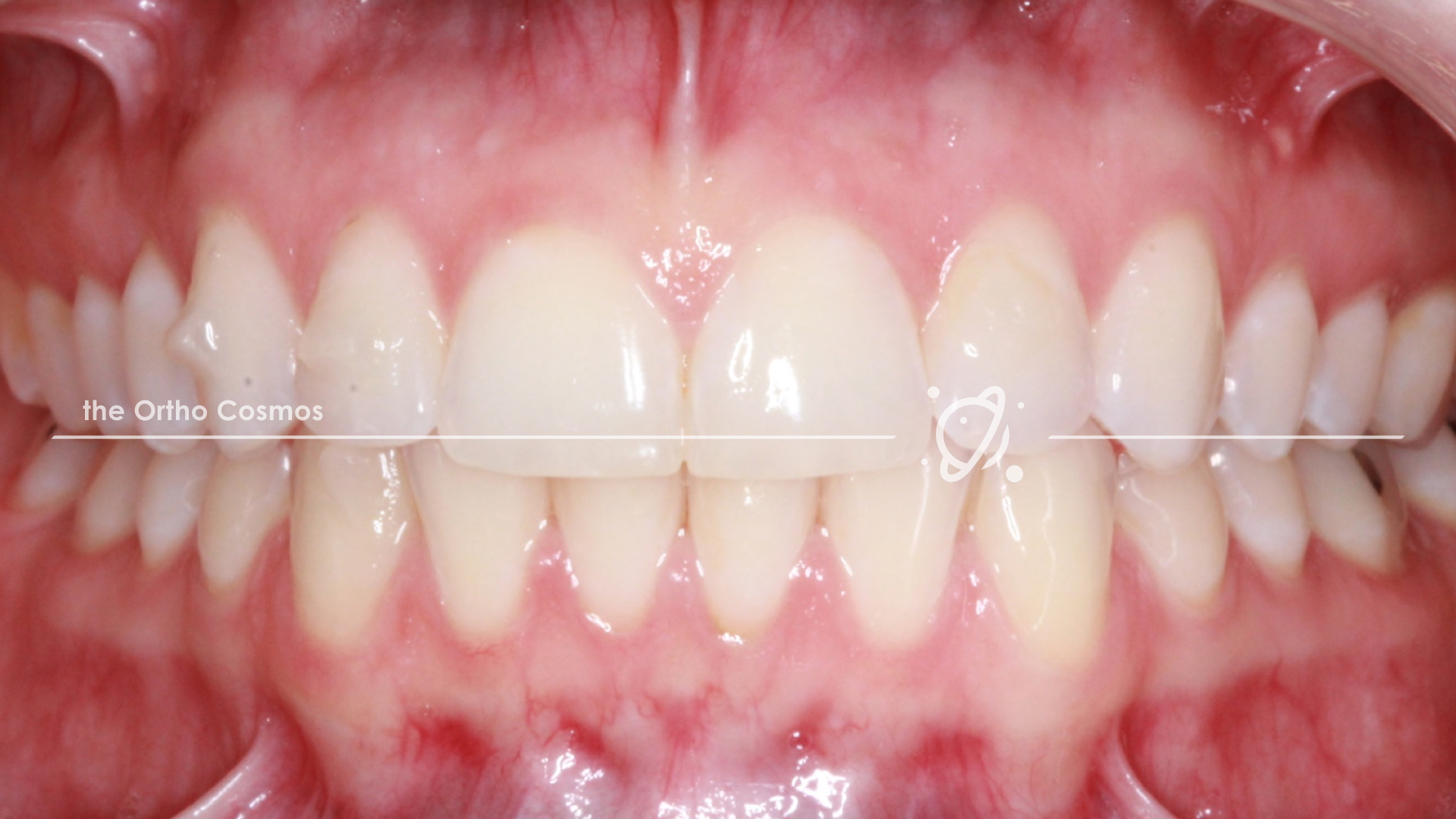
Checking Invisalign Attachments & Flash
The use of Invisalign attachments are an important part of achieving the best results with Invisalign, so it is essential that these attachments are properly placed and that their integrity is checked during the course treatment. They shouldn’t be worn down, chipped, or missing to work effectively. The tried and true way of visualizing the attachments has always been to air-dry the teeth completely. However, when you use composite materials, like Ivoclar’s Tetric EvoCeram Shade T, that blends in with the teeth correctly it becomes more difficult to assess attachment placement and how they are holding up throughout treatment.
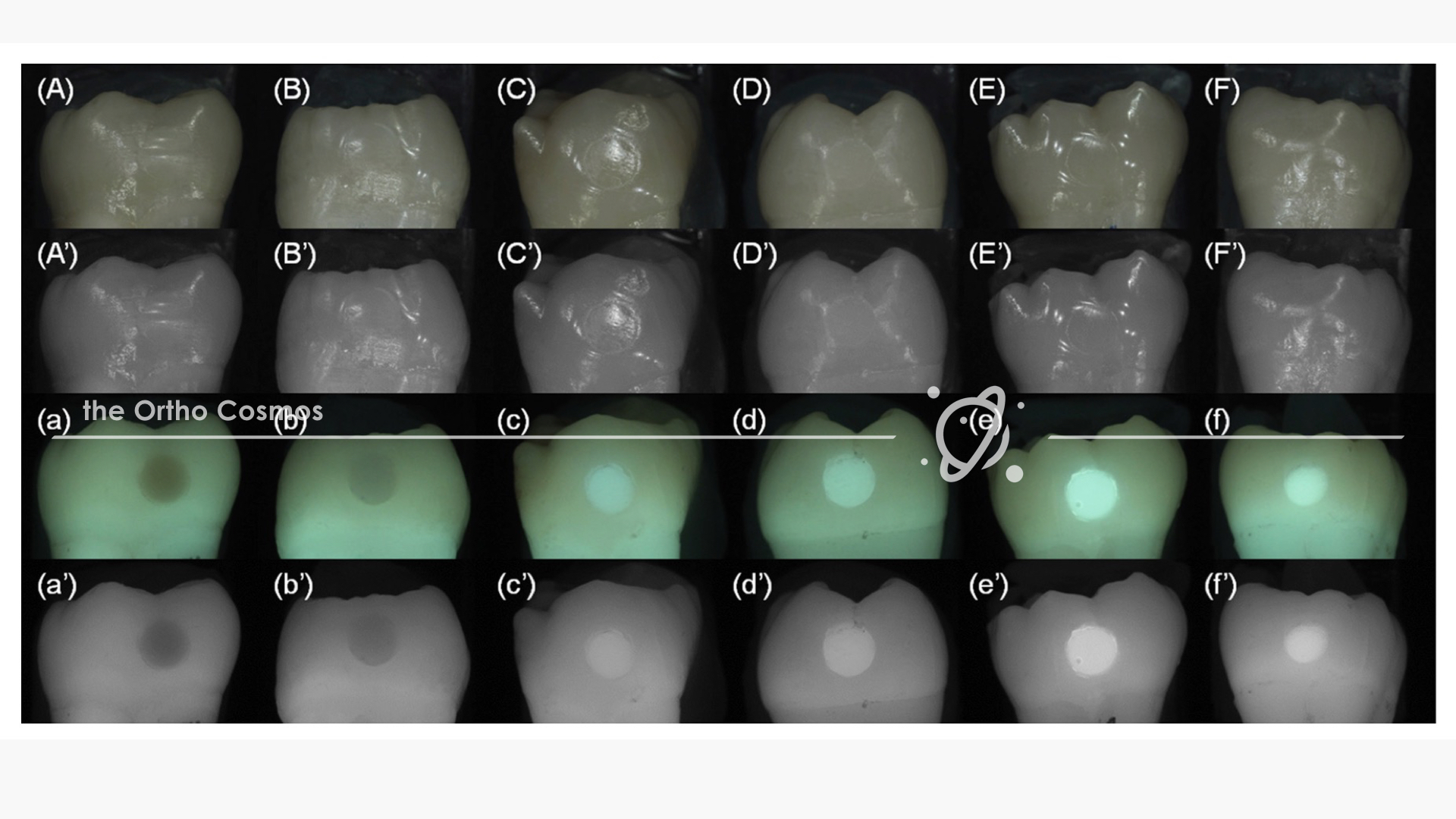
A simple trick to better visualize attachments in order to remove excess material around the attachments and assess their overall shape, is to use a handheld black light. Under natural light, restorative composites are designed to match with the surrounding tooth structure. However, under a fluorescence-inducing UV light, subtle (and sometimes not so subtle) differences in fluorescent qualities between the attachment materials and the tooth become apparent as seen in the diagram below.
 Being able to adequately visualize what is the attachment and what is the tooth helps make cleanup after attachment placement that much faster. Below is a before and after example, with Tetric EvoCeram composite attachments, showing how efficient flash cleanup is when using a black light to aid in visualization.

Evaluating Aligner Tracking
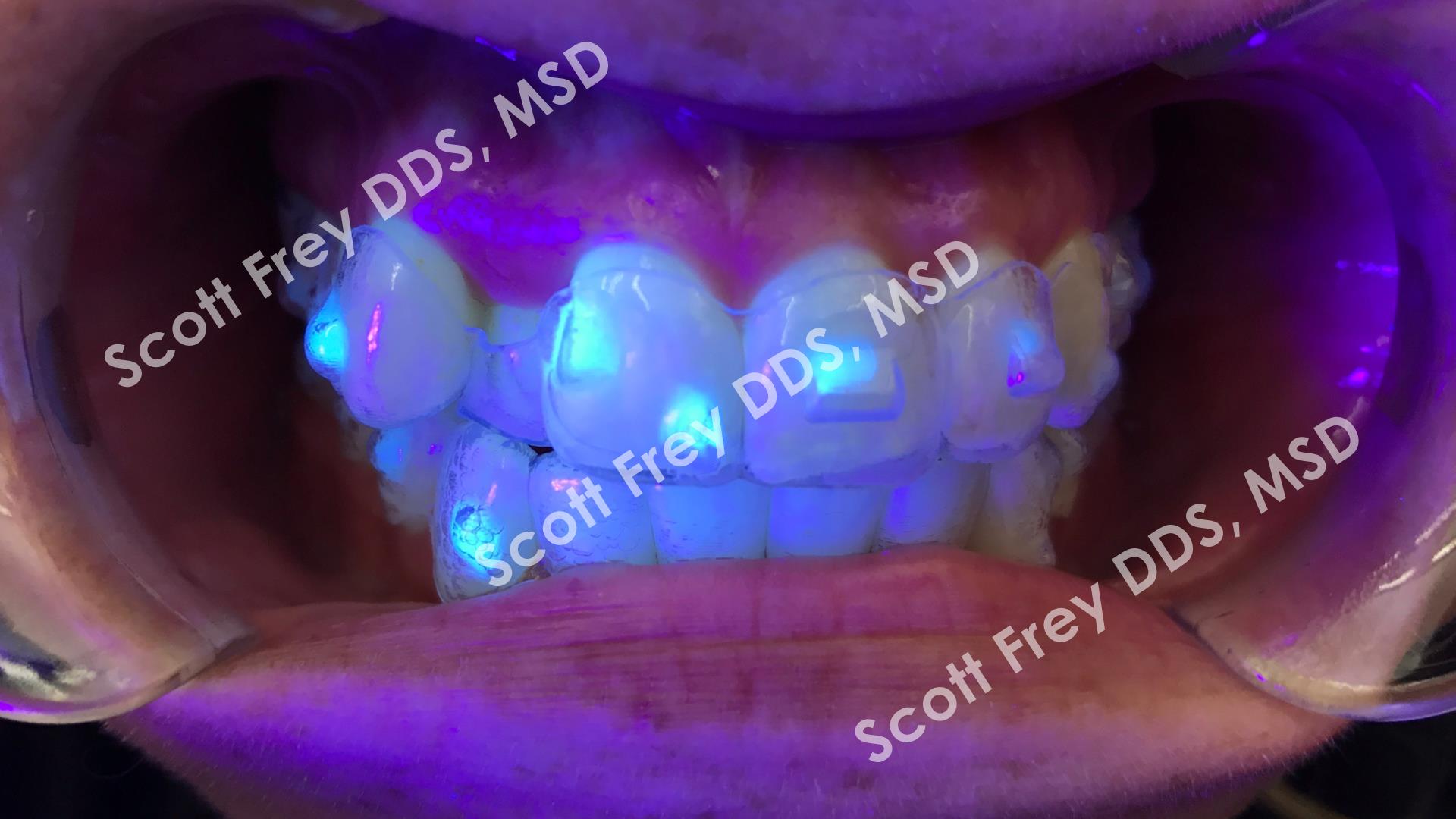
If there is any question about how the attachments are tracking relative to the ‘pockets’ on the aligners, again a black light works well. Below is an image showing poorly tracking teeth and attachments not correctly inside the aligner pockets using a black light.
 If you have patients who frequently work under black lights, you may get complaints regardless of the material used. There will be some slight discrepancy between the fluorescence of the tooth and that of the attachment material, but under these circumstances, you will want to select a material that isn’t as obvious under black light as others. 3M ESPE’s Filtek Supreme line of composites has been shown to perform very similar to natural tooth structure under UV light, so that composite is a good option.

 The placement of teeth on the CAD software does not guarantee that the actual teeth will respond into that desired outcome. This is where the best practices of tooth movement come into play. An experienced orthodontist will modify the movements that are drafted to maximize the predictability of the final result, plus maintain a healthy outcome. This is where the skill of the doctor determines the success of the patient’s treatment. The staging of the movement, the speed, direction and supporting attachments are the true secrets to success. A proper treatment plan is the critical component.
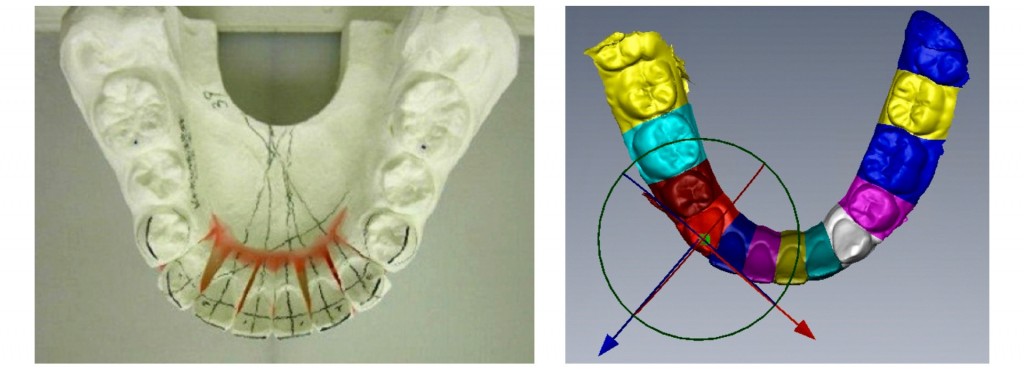 Clear aligner therapy started with sectioning plaster casts and manually placing teeth into position. Some aligner systems still use a digital version of the same technique. The most versatile clear aligner products offer more effective tools in the diagnosis and design of the treatment. These allow the doctor to better control the movements and represent the desired forces into the aligners worn by the patient. The better the software is in designing the treatment, the better the aligner system. The better the available force systems to move teeth, the better the aligner system. And the better the transfer of digital data into the fabrication of the plastic aligner, the better the aligner system. Even rudimentary clear aligner systems can treat simple crowding issues. Only the best clear aligner systems combined with an experienced doctor can achieve the best results treating a full range of simple to complex malocclusions.